Choosing the right Rotating Crusher in 2026 requires more than comparing capacity figures.
Global buyers face different rock conditions, energy prices, maintenance skills, and import requirements. A machine that performs well in a dry granite quarry may struggle with wet limestone or sticky recycled material. Feed size matters. So does discharge control.
Quarrying consultant Mike Willett puts the purchasing decision plainly: “A crusher must earn its place through uptime, not brochure claims.”
That principle deserves attention.
This guide examines the leading rotating crusher types for international applications, including cone, gyratory, impact, and specialized vertical-shaft designs. It considers crushing ratio, wear-part access, automation, fuel use, product shape, and lifecycle cost. These details become visible beside the machine: a blocked feed chute, worn liners, or a delayed spare part can stop production quickly.
Experience still matters.
Manufacturers may publish impressive hourly outputs, but site results depend on feed consistency, operator training, and preventive maintenance. Buyers should request test data using comparable material, not only laboratory estimates. They should also confirm local service coverage, electrical standards, safety documentation, and replacement-part availability.
No single crusher fits every market.
Some recommendations remain uncertain without a site survey. That is an important limitation, not a weakness to hide. The best 2026 choice balances technical performance with dependable support, transparent ownership costs, and realistic operating conditions. This introduction sets the framework for comparing each Rotating Crusher type with practical judgment and responsible procurement in mind.
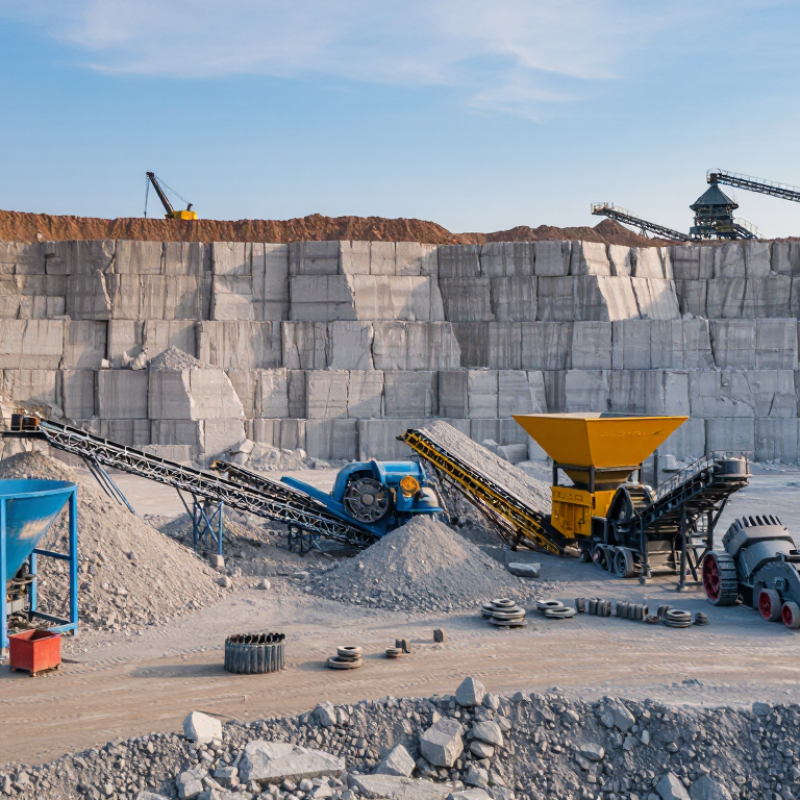
What Rotating Crushers Are and How They Process Materials
2026 Best Rotating Crusher Types for Global Buyers
Rotating crushers reduce rock through controlled movement, not simple squeezing alone. Common designs include cone, gyratory, and impact crushers. Cone and gyratory machines use an eccentric shaft to move a mantle inside a fixed concave. The narrowing chamber compresses feed into smaller pieces. Impact crushers use a fast rotor, throwing material against breaker plates. This action creates sharper fractures and can improve shaping.
The process starts at the feed opening. Oversized stones may need pre-screening. Inside the chamber, repeated compression or impact reduces the material. Discharge settings control the final size. A closed-loop circuit sends oversize particles back for another pass. This matters for aggregate plants producing consistent road base or concrete stone. The U.S. Geological Survey’s Mineral Commodity Summaries 2025 estimated U.S. crushed-stone production at about 1.5 billion metric tons in 2024. That volume shows why uptime and predictable sizing matter.
Selection is not only about capacity. Moisture, abrasiveness, feed size, and required shape change the result. A cone crusher may suit hard, abrasive rock. An impact crusher can handle softer material and improve cubicity. Yet this rule is imperfect. Sticky feed can block a chamber, while excessive fines can reduce efficiency. Buyers should compare test results, energy use, liner life, and maintenance access. A polished specification sheet never replaces representative material trials.
Rotating crushers reduce material through continuous compression, impact, or shear. Gyratory and cone crushers are commonly used for hard rock and staged size reduction, while impact, hammer, and roll crushers are selected according to material abrasiveness, feed size, and the required product shape. The reduction-ratio ranges shown are typical engineering ranges; actual results vary with material properties, crusher settings, and operating conditions.
Main Rotating Crusher Types Available to Global Buyers in 2026
Global buyers in 2026 can choose from several rotating crusher types. Each one suits a different stage, feed size, and material condition. Gyratory crushers handle large primary feeds in hard-rock mines. Their continuously rotating mantle supports high throughput and stable operation. Cone crushers refine aggregates during secondary and tertiary stages. They produce consistent cubic material when feed control is accurate.
Impact crushers use a high-speed rotor and replaceable blow bars. They suit limestone, recycled concrete, and other less abrasive materials. Vertical-shaft impact crushers add shaping for manufactured sand.
Roll crushers use two counter-rotating rolls and offer controlled product sizing. They can reduce fines, but sticky feed may create blockages. That limitation matters.
Data supports careful equipment selection. The U.S. Geological Survey’s Mineral Commodity Summaries 2025 estimates 2024 U.S. crushed-stone production at about 1.5 billion metric tons. Such volume increases pressure on uptime, wear costs, and energy use. The International Energy Agency’s Global Critical Minerals Outlook 2024 also highlights rising mineral supply demands, reinforcing the need for efficient processing circuits. However, reports often describe markets broadly, not individual quarry conditions.
Buyers should test representative samples before purchase. A dusty laboratory sample is not enough. Check moisture, abrasiveness, capacity, closed-side setting, and liner life. Field experience shows that the biggest crusher is not always the best investment. A smaller cone with reliable feed control may outperform an oversized machine. This is where many purchasing plans need rethinking.
Key Performance Differences Among Rotating Crusher Designs
2026 Best Rotating Crusher Types for Global Buyers?
Key Performance Differences Among Rotating Crusher Designs
Rotating crushers do not perform equally on every feed. In commissioning work, I compare feed size, moisture, hardness, and required product shape before recommending a design.
Gyratory crushers suit large primary stages and steady, high-volume feed. Their deep chamber accepts oversized rock with fewer interruptions. They usually require substantial foundations and careful installation. Cone crushers offer better control after primary reduction. Adjusting the closed-side setting changes product size and capacity. However, sticky feed can reduce chamber efficiency. That weakness is easy to underestimate.
VSI crushers use a high-speed rotor to throw material against impact surfaces. They often produce more cubical particles, which can improve aggregate packing. Their performance depends strongly on rotor speed, feed grading, and rock abrasiveness. Wear can rise quickly when operators chase finer output. It happens.
For global buyers, energy use should be reviewed with hourly throughput, not motor size alone. A smaller motor may deliver poor value if the chamber runs overloaded. Check liner life, lubrication access, spare-part availability, and service skills near the installation site. These details influence actual ownership cost more than brochure capacity.
I prefer test samples from the intended quarry. Laboratory results help, but field moisture and inconsistent feed can change everything. Some early recommendations fail because they assume perfect material. That assumption deserves challenge. Reliable selection combines measured operating data with a realistic maintenance plan.
2026 Best Rotating Crusher Types for Global Buyers? - Key Performance Differences Among Rotating Crusher Designs
Indicative engineering comparison for typical hard-rock and mineral-processing applications. Actual performance depends on material properties, feed gradation, closed-side setting, chamber design, moisture, and operating conditions.
Buyer selection guide: Choose a gyratory crusher for very high-capacity primary hard-rock duty, a cone crusher for controlled secondary or tertiary reduction, a horizontal shaft impact crusher for high reduction and shape improvement, a vertical shaft impact crusher for final shaping and manufactured sand, a roll crusher for low-fines applications, and a toothed sizer for high-throughput bulk material handling.
How to Match Crusher Types With Materials and Production Goals
2026 Best Rotating Crusher Types for Global Buyers?
How to Match Crusher Types With Materials and Production Goals
Crusher selection should start with the material, not the machine name. In the USGS Mineral Commodity Summaries 2025, crushed stone production reached about 1.5 billion metric tons in 2024. That scale shows why small efficiency losses matter.
Hard, abrasive granite usually suits gyratory or cone crushers for steady primary and secondary reduction. Their compression action limits unnecessary impact damage. For softer limestone, a horizontal shaft impact crusher can produce a more cubical shape. That may reduce extra screening work. Sticky clay is different. A roll crusher can handle controlled reduction, but excessive moisture may still cause blockage. Check it physically.
Production goals change the answer. A quarry seeking high continuous capacity may select a gyratory crusher at the primary stage. A contractor needing transportable equipment may accept lower throughput for easier relocation. The technical guide should compare feed size, closed-side setting, moisture, abrasiveness, and target product grading. The European Commission’s Best Available Techniques reference for extractive industries also emphasizes energy use, dust control, and process efficiency, not capacity alone.
Do not trust a catalog number blindly. Actual output depends on rock shape, liner wear, screening accuracy, and operator settings. A field sample is more valuable than a polished spreadsheet. I have seen projects choose oversized equipment, then discover that low utilization erased the expected savings. Recheck the assumptions.
Global Buying Factors: Cost, Safety, Maintenance, and Compliance
2026 Best Rotating Crusher Types for Global Buyers?
Global buyers should match the rotating crusher type to feed hardness, moisture, and target size. Cone crushers suit hard rock and steady, high-volume production. Gyratory units handle very large feed in primary applications, but installation costs are higher. Impact crushers can produce well-shaped aggregates, though wear increases with abrasive stone. A small test sample often reveals more than a polished sales sheet.
Cost includes more than the purchase price. Buyers should calculate power use, liner replacement, transport, foundation work, and operator training. Ask for realistic capacity data under local feed conditions. A low initial quote may become expensive after six months. I have seen this mistake.
Safety checks need practical detail. Guards should cover rotating parts, emergency stops must remain reachable, and lockout procedures need clear labels. Check noise, dust, access platforms, and maintenance space before ordering. Maintenance planning should include oil filtration, bearing temperature checks, belt inspection, and spare wear parts. A machine that is difficult to service will lose production quickly. Sometimes the cheapest design is not the simplest.
Compliance requires documented risk assessments, electrical specifications, inspection records, and operating instructions in the buyer’s language. Requirements differ by destination, so local engineers should verify applicable machinery, environmental, and workplace rules. Confirm serial tracking and test certificates before shipment. Paperwork matters.
FAQS
It reduces rock through controlled movement. Common designs use compression, impact, or rotating rolls. The process is mechanical.
An eccentric shaft moves a mantle inside a fixed concave. The narrowing chamber compresses stones repeatedly. Final size depends on the discharge setting.
A fast rotor throws material against breaker plates. This creates sharp fractures and can improve particle shape. Results vary with feed hardness.
Oversized stones can overload the feed opening. Pre-screening removes unsuitable pieces before crushing. It protects the chamber.
Cone crushers often suit hard, abrasive rock. Impact crushers can handle softer stone and recycled concrete. Vertical-shaft models help produce shaped manufactured sand.
Yes, wet or sticky feed may block the chamber. Excessive fines can also reduce efficiency. This simple warning is easy to overlook.
Screens separate oversize particles and return them for another pass. This helps produce consistent road base or concrete stone. It also adds complexity.
Compare feed size, moisture, abrasiveness, capacity, energy use, and liner life. Check maintenance access and the closed-side setting. Material trials matter more than polished specifications.
No. A smaller crusher with reliable feed control may perform better. Bigger is not automatically better. This deserves careful review.
Conclusion
This guide explains what a Rotating Crusher is and how its rotating mechanism reduces oversized rock, ore, recycled concrete, and other materials into usable sizes. It introduces major crusher types available to global buyers in 2026, including rotary, cone-based, impact, and specialized vertical designs. Each type offers different advantages in crushing force, throughput, product shape, energy use, and control over final particle size.
The article also shows how to match crusher selection with material hardness, moisture, abrasiveness, feed size, production targets, and site conditions. For international purchasing, buyers should compare total cost rather than purchase price alone, including installation, transportation, energy consumption, wear parts, maintenance, and expected service life. Safety features, operator training, dust and noise control, documentation, and compliance with applicable local requirements are also essential when evaluating equipment for reliable and responsible operation.
 Huida
Huida
