 Huida
Huida
Huida
Huida
Choosing the right Scrap Steel Processing Equipment can shape productivity, safety, and long-term operating costs. Global buyers often compare shredders, balers, shears, separators, conveyors, and metal sorting systems. Each machine serves a different material profile. A compact car-body shredder may not suit heavy structural steel. A powerful shear may struggle with mixed, contaminated loads.
This guide examines equipment through practical purchasing criteria, including throughput, feed size, motor capacity, wear-part availability, and maintenance access. It also considers real operating conditions, such as humid yards, irregular scrap supply, and limited workshop space. Small details matter. A blocked conveyor can stop an entire line. A poorly selected baler can create uneven bundles and increase handling time. Verified specifications, factory testing, operator training, and clear after-sales support should influence every decision.
There is no universal best machine. That assumption often causes expensive mistakes. Buyers should request test results using representative scrap, not ideal samples. They should confirm electrical standards, noise limits, installation requirements, and local environmental obligations. Supplier reputation matters, but documentation matters too. Warranties, spare-parts schedules, inspection records, and service response times provide stronger evidence than attractive brochures. Some recommendations may still require revision after site testing. That is normal. Reliable purchasing depends on measured performance, honest risk assessment, and a clear understanding of future material changes. With these principles, companies can build safer, more adaptable, and financially responsible processing operations across different markets.
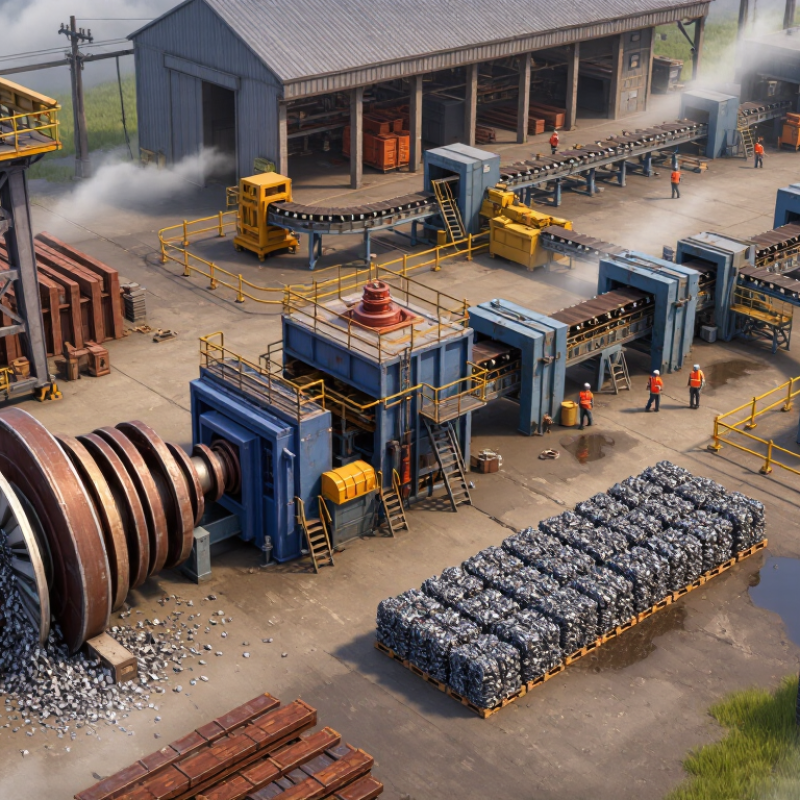
Scrap steel processors use different machines for different material sizes, grades, and output goals. Hydraulic alligator shears cut beams, pipes, and thick sections into manageable pieces. They work well in yards handling mixed structural steel. For bulky light scrap, metal balers compress loose sheets, cans, and stamped parts into dense bundles. This reduces storage space and improves transport efficiency.
Heavy-duty scrap shears process car bodies, machinery frames, and oversized steel sections. Shredders break prepared scrap into smaller fragments and help release steel from attached materials. However, shredders demand strong foundations, controlled feeding, and regular inspection. Hammer wear can increase operating costs faster than expected. A practical setup may also include conveyors, magnetic separators, and eddy-current systems for material sorting. These units improve recovery rates when input scrap contains non-ferrous metals.
Safety equipment matters as much as processing capacity. Enclosed control areas, dust suppression, emergency stops, and guarded transfer points support safer daily operations. Buyers should check motor power, chamber dimensions, cutting force, maintenance access, and local electrical requirements. A machine that looks efficient on paper may perform poorly with wet, tangled, or contaminated scrap. Site trials are valuable. They reveal feeding problems that brochures rarely mention.
In my experience, choosing equipment by actual scrap composition is more reliable than choosing by maximum rated capacity alone.
Hydraulic alligator shears cut beams, pipes, and thick sections into manageable pieces. They suit yards processing mixed structural steel. Check cutting force carefully. Maximum capacity can mislead.
Metal balers compress loose sheets, cans, and stamped parts into dense bundles. This saves storage space and improves transport efficiency. Dry, clean feed usually produces better bales.
Heavy-duty shears process car bodies, machinery frames, and oversized steel sections. They suit bulky, dense scrap. Feeding still needs control. Large machines may waste energy on lighter materials.
A shredder needs a strong foundation, controlled feeding, and regular inspection. Rotor and hammer wear can raise costs quickly. Wet or tangled scrap may reduce throughput. Real trials reveal problems.
Magnetic separators remove ferrous steel after shredding. Eddy-current units can separate non-ferrous metals. Screens and air classification may remove lighter contaminants. Separation is never perfect.
Record throughput, power use, noise, and processed material size. Use scrap matching your normal feedstock. Test several cycles. One successful demonstration proves little.
Look for fixed guards, emergency stops, enclosed controls, and guarded transfer points. Dust suppression and noise controls also matter. Operators need clear isolation procedures. Safety cannot be an afterthought.
No. Moisture, tangled wire, contamination, and irregular sizes can reduce real output sharply. Request measured recovery rates and sample-based testing. Brochures rarely show feeding failures.
Modular lines may reduce the initial investment and support gradual expansion. They can require more manual sorting. That trade-off needs honest calculation. Lower cost is not always lower cost.
Ask for test data, maintenance records, spare-part availability, and operator training details. Confirm electrical and safety documents for the destination country. Also ask about downtime and repair response. Those answers may be uncomfortable.
Scrap Steel Processing Equipment plays a vital role in turning recovered steel into clean, valuable, and reusable raw material. This overview introduces the main equipment categories used in scrap yards and recycling facilities, including collection tools, sorting systems, cutting machines, shears, balers, shredders, and material separation units. It explains how scrap steel is collected, inspected, sorted by type and size, and prepared for efficient downstream processing.
The article also highlights how cutting and shearing machines reduce oversized materials, while balers create compact bundles for easier storage and transportation. Shredders and separation systems help process mixed scrap and remove unwanted materials through mechanical and magnetic methods. For global buyers, equipment performance should be evaluated through processing capacity, energy efficiency, durability, maintenance requirements, automation, and output quality. Safety features, operator protection, installation support, and compliance with applicable regulations are equally important when selecting reliable processing solutions.
