Huida Huida

China Top 10 Hydraulic Grapple Manufacturers?

Time:2026-09-24 Author:Madeline
0%

China’s hydraulic grapple industry is shaped by practical demands: secure gripping, reliable rotation, and durable performance in dust, mud, and repeated impact. The Grand View Research report on the global construction equipment market estimated its value at USD 151.7 billion in 2023 and projected continued growth through 2030. That broad market figure is useful context, not a measure of grapple sales. Buyers comparing Chinese manufacturers should also examine product-specific evidence, including rated operating pressure, jaw capacity, steel specifications, warranty terms, and service availability.

A Hydraulic Graple can look robust in a catalog yet perform poorly if its hydraulic flow requirements do not match the carrier. Small details matter. A leaking hose can stop a job; an undersized jaw may struggle with uneven scrap or timber. This guide introduces ten Chinese manufacturers and considers their product ranges, engineering capabilities, and export experience. Company claims should be checked against technical documents, test records, and customer references. Not every manufacturer publishes comparable data, so the ranking should be read as a starting point, not a guarantee of performance.

A verified, attributable quotation from a named hydraulic-grapple expert was not available for this introduction. Rather than invent one, the comparison focuses on checkable specifications and documented market context. That is less dramatic, perhaps, but more useful when choosing equipment for a real job site.
China Top 10 Hydraulic Grapple Manufacturers?

What Is a Hydraulic Grapple and How Does It Work?

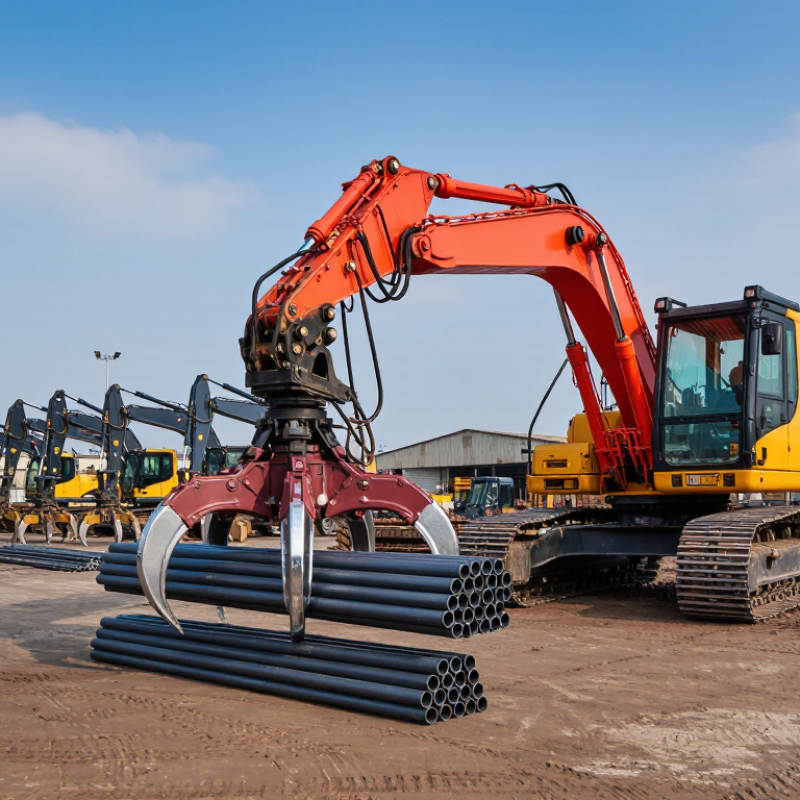
A hydraulic grapple is an attachment with two or more curved jaws that open and close around logs, scrap, rocks, or other bulky material. Its movement comes from hydraulic cylinders: pressurized oil pushes a piston, which drives the jaws through a linkage. A machine’s control valve directs oil to either side of the cylinder, giving the operator control of gripping and release. The jaws may rotate as well, depending on the attachment’s design. ISO 4413:2010, the international standard for hydraulic fluid power systems, emphasizes controlling pressure-related hazards and designing systems to operate reliably.

In the cab, the process feels simple: move a control, align the jaws, then close them around the load. Yet grip depends on more than cylinder force. Jaw shape, load size, oil flow, and the carrier’s hydraulic capacity all matter.
Too much force can crush material or strain the attachment; too little can let a wet log slip. In real work, uneven loads make the textbook explanation less tidy. Check the attachment’s rated capacity and the carrier’s flow and pressure specifications before use.

Tips: Keep the jaws clear of packed debris, inspect hoses for leaks or abrasion, and test movement slowly before lifting. Never treat a firm grip as proof that a load is secure.

Which Industries Use Hydraulic Grapples in China?

Hydraulic grapples are used wherever operators must lift, sort, or hold irregular materials. In China, forestry is a major application: machines move logs at roadside landing areas, timber yards, and processing sites. The National Forestry and Grassland Administration reported that China’s forestry industry output value exceeded 9 trillion yuan in 2023. That scale helps explain demand for equipment that can handle wet trunks and uneven loads. A grapple’s jaw shape and rotation range matter as much as its rated lifting capacity.

Construction and demolition contractors use grapples to load branches, concrete fragments, and mixed site debris into trucks. Scrap-processing yards use them to sort bulky metal pieces, while ports and bulk-material terminals handle timber and other loose cargo. China’s National Bureau of Statistics reported construction-industry output value of about 31.6 trillion yuan in 2023, indicating the sector’s enormous operating footprint, though this figure does not measure grapple sales.

Different jobs need different attachments. A forestry grapple may grip long logs securely, while a demolition grapple needs stronger teeth and controlled rotation. Small details matter. Buyers should check carrier compatibility, hydraulic flow, jaw opening, and material weight. In practice, matching the tool to the material is not always straightforward. That part deserves more attention.

How to Evaluate China’s Hydraulic Grapple Manufacturers

China Top 10 Hydraulic Grapple Manufacturers?

How to Evaluate China’s Hydraulic Grapple Manufacturers

Choosing a hydraulic grapple requires more than comparing prices and catalog photos. Start with the machine it will serve: check operating weight, hydraulic flow, working pressure, and coupler type. A grapple that looks substantial may still be poorly matched to an excavator’s hydraulic system. Ask for drawings, material specifications, and clear details about cylinder protection and hose routing. These small details matter.

Tips: Request a test report or a live demonstration using material similar to yours. Check welds around the jaw pivots, listen for uneven cylinder movement, and ask how replacement seals and parts are supplied. Get warranty terms in writing. Then read them carefully.

Evaluate the manufacturer’s process, not just its finished product. Ask how each unit is inspected, whether pressure testing is documented, and how design changes are recorded. A reliable supplier should answer specific technical questions without vague promises. If possible, speak with customers using similar equipment and working conditions. Their feedback may reveal wear patterns that a showroom cannot. I would also compare several offers in person; specifications can be presented differently, and I have not found one checklist that catches every weakness.

China’s Top 10 Hydraulic Grapple Manufacturers

China’s Top 10 Hydraulic Grapple Manufacturers are best compared by application, not ranking alone. Suppliers in China serve forestry, scrap handling, construction, and material recycling, with grapple designs ranging from rotating log grabs to heavy-duty sorting attachments. A suitable manufacturer should explain jaw capacity, operating pressure, compatible excavator weight, and the intended material. Ask for dimensional drawings and test records, not just a product photo. Small details matter.

When reviewing a shortlist, check weld quality, cylinder protection, hose routing, and the availability of replacement seals. Request clear information on steel grades and rated load, then compare those specifications across similar models. A factory visit or live video inspection can help verify production and assembly practices. Still, a polished presentation does not prove long-term reliability; field references and service response times deserve attention. I may be overemphasizing documentation, but vague specifications make comparisons difficult.

Tips: Share your machine model, hydraulic flow, and typical load before requesting a quotation. Ask how the grapple performs with uneven material, such as tangled branches or mixed scrap. Confirm packing dimensions, spare-part lead times, and warranty terms in writing. A low purchase price can become less attractive when wear parts are hard to obtain.

China’s Hydraulic Grapple Manufacturers: Typical Carrier-Class Hydraulic Pressure

Hydraulic pressure requirements generally increase with excavator size. The figures below are indicative selection ranges, not a manufacturer ranking or model-specific specifications; always confirm compatibility with the grapple and carrier manuals.

Indicative values in MPa; actual operating pressure varies by carrier, attachment design, and hydraulic circuit setup.

How to Compare Manufacturers by Product Range and Service

China Top 10 Hydraulic Grapple Manufacturers? How to Compare Manufacturers by Product Range and Service

A broad catalog can look impressive, but the useful question is whether its grapples fit your excavator and daily work. Compare jaw shapes, opening widths, rated pressure, and compatible machine weights. A timber grapple and a demolition grapple may look similar in a photo, yet handle very different loads. Ask for dimensional drawings and weight specifications. Check them against your machine’s hydraulic flow and coupler before requesting a quote. Small mismatches matter.

Service deserves the same scrutiny as product range. Ask how technicians guide installation, which wear parts are stocked, and how quickly support staff answer technical questions. Request a parts list, warranty terms, and clear procedures for reporting faults. A practical test: send a specific question about hose routing or cylinder maintenance and note whether the reply addresses your setup. Prompt replies help. Vague promises do not.

Compare several Chinese manufacturers using the same application details, such as machine model, material, operating hours, and worksite conditions. This makes quotations easier to assess. Look beyond the lowest price: confirm what is included, from hydraulic hoses to inspection records. If a supplier cannot provide consistent specifications, pause and ask again. I would not treat a polished brochure as proof of field performance; that judgment needs real operating feedback, and buyers may not always have it.

FAQS

What is a hydraulic grapple?

It is an attachment with curved jaws for handling logs, rocks, scrap, and bulky materials. Hydraulic cylinders open and close the jaws. Some models also rotate. Simple in theory.

How does a hydraulic grapple work?

Pressurized oil pushes a piston inside the cylinder. A linkage transfers that movement to the jaws. The control valve directs oil for gripping or release.

What affects a grapple’s gripping performance?

Jaw shape, load size, oil flow, and hydraulic pressure all affect the grip. A wet log may slip. Excessive force may crush material or damage the attachment.

How can I check machine compatibility?

Compare the grapple’s requirements with the carrier’s operating weight, hydraulic flow, working pressure, and coupler type. Confirm these details before ordering. Pictures are not enough.

What should I inspect before lifting?

Remove packed debris from the jaws. Check hoses for leaks, cuts, and abrasion. Test movement slowly before lifting any load. A firm grip does not guarantee safety.

How should I evaluate a grapple manufacturer?

Ask for drawings, steel specifications, rated capacity, and cylinder protection details. Review welds around the jaw pivots. Request documented pressure-testing information.

Should I request a live demonstration?

Yes, if possible. Test similar material, such as tangled branches or mixed scrap. Watch for uneven cylinder movement. A showroom display can hide practical weaknesses.

What service details should I confirm?

Get warranty terms, replacement-seal availability, spare-part lead times, and packing dimensions in writing. Ask about service response times. Cheap equipment may become expensive later.

Is one checklist enough when comparing suppliers?

Probably not. Compare several offers using identical specifications. Speak with users handling similar loads. I may overvalue documents sometimes, but vague specifications remain a warning sign.

Conclusion

This article explains what a hydraulic grapple is and how hydraulic pressure powers its jaws to grip, lift, sort, and move materials. It also explores the industries in China that commonly use these attachments, including construction, forestry, recycling, agriculture, and material handling. By outlining typical applications and operating principles, the guide helps readers understand how a Hydraulic Graple can support different jobs and equipment requirements.

The article also presents a practical framework for evaluating Chinese manufacturers, considering factors such as build quality, product range, customization options, technical support, spare parts, and after-sales service. Its overview of ten manufacturers is intended to help buyers compare capabilities rather than focus on names alone. The final section explains how to weigh product selection and service together to identify a suitable supplier for a project’s working conditions, machine compatibility, and long-term needs.

Madeline

Madeline

Madeline is a dedicated marketing professional with a wealth of expertise in our company's core offerings. With a keen understanding of the industry, she brings a unique perspective to her role, consistently delivering high-quality content that highlights the superior aspects of our products. As......