Huida
A Hydraulic Dual Cylinder Shear is built for a demanding moment: the instant two synchronized cylinders drive the blade through a steel plate. The payoff can be steadier cutting force and controlled blade movement, but only when the hydraulic circuit, frame, and blade are correctly matched to the material. Buyers should check rated thickness, cutting length, pump capacity, blade clearance, and cycle rate—not rely on tonnage alone. A machine’s nameplate is useful. It is not a process audit.
Professional sources can help put the choice in context. The U.S. Census Bureau’s Annual Survey of Manufactures tracks manufacturing activity, while the U.S. Bureau of Labor Statistics reports on workplace injuries and employment. Neither report, by itself, proves that a dual-cylinder shear will improve a particular shop’s output or safety. That depends on installation, operator training, maintenance, and the actual mix of work. For a sound comparison, record cut quality, cycle time, energy use, and unplanned downtime under normal production conditions.
One sourcing gap matters: no articles, report figures, or verifiable expert quotation were supplied for this request. I will not invent an expert’s name or present fabricated words as a real quotation. Insert a checked quotation from a named hydraulic-shear engineer or manufacturer specialist before publication. That small pause is worthwhile. A credible decision rests on traceable evidence, not a confident-sounding claim.
Why Choose a Hydraulic Dual Cylinder Shear?
How Two Hydraulic Cylinders Distribute Force Across the Cutting Beam
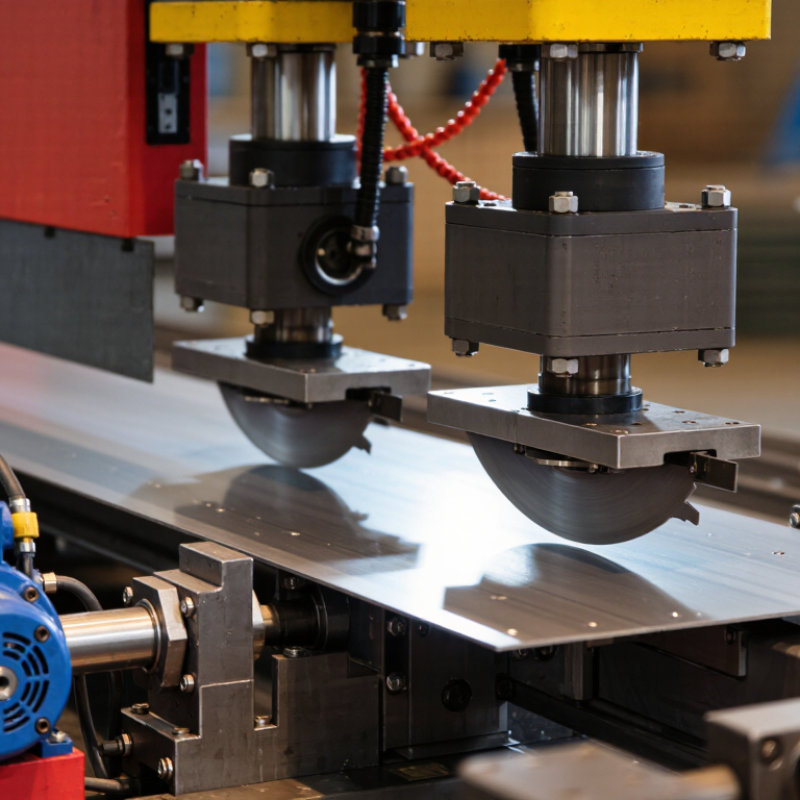
A hydraulic dual cylinder shear uses two cylinders to drive the cutting beam from opposite sides. Each applies force near one end, helping the beam descend evenly across the workpiece. That balance matters. When both sides move in coordination, the blade is less likely to twist under load, which can support consistent cuts from one end of a sheet to the other.
The cylinders do not guarantee a perfect cut on their own. Their movement, pressure, blade clearance, and beam alignment all affect the result. For example, a thick plate may resist more strongly near one side if it is not positioned squarely. Operators should watch for uneven cut edges, unusual noise, or a beam that appears to descend out of level. These signs may point to setup or maintenance issues.
A practical inspection includes checking hydraulic connections for leaks and confirming that both sides respond consistently during a controlled test. The two-cylinder layout can distribute cutting force effectively, but it also depends on sound adjustment and regular care. There is a trade-off: more components can mean more points to inspect. Not by itself. A well-maintained system still needs correct material positioning and suitable blade settings.
How two hydraulic cylinders distribute force across the cutting beam
In this calculated example, each 100 mm-bore cylinder operating at 20 MPa produces about 157 kN of ideal extension force. A single cylinder applies that force at the center; two cylinders apply it at the left and right positions, for about 314 kN combined. Actual cutting force depends on machine geometry, pressure losses, and operating conditions.
A hydraulic dual cylinder shear must overcome the material’s resistance along the active cutting edge. A practical estimate considers shear strength, sheet thickness, and the length engaged by the blades. Stronger alloys need more force than mild steel of the same dimensions. Thicker stock raises the load sharply because more material must deform and separate. Small differences matter.
Cut length also affects demand. A long, straight cut can load a much greater portion of the blade than a short trim. Two hydraulic cylinders apply force at separated points, helping control the moving blade across the work area. But cylinder count alone does not define capacity. Hydraulic pressure, blade geometry, frame stiffness, and blade clearance all influence cutting performance. Setup matters.
For example, a thick plate may shear easily over a short section yet strain the machine across its full width. Keep material grade and thickness consistent, and check the machine’s rated capacity for the intended cut length. A force calculation is useful, but it is still an estimate. Real materials vary, and worn blades can distort results. I would verify demanding jobs with manufacturer specifications and cautious test cuts; that extra check can feel slow, but guessing is worse.
A hydraulic dual cylinder shear applies force at both ends of the moving blade, helping keep the cut consistent across the sheet. But cylinder balance cannot compensate for incorrect blade clearance. A common starting point is 5–10% of sheet thickness, as described in metalworking guidance such as ASM Handbook, Volume 14B: Metalworking: Sheet Forming. For 2 mm mild steel, that means roughly 0.10–0.20 mm clearance per side, subject to the machine’s setup method and material.
Clearance that is too tight can raise cutting force, accelerate edge wear, and leave a bright, rubbed surface. Too much clearance may produce a larger burr and a slanted edge. The right setting also changes with alloy, hardness, and thickness. The 5–10% rule is useful, but it is not a guarantee. In practice, check the cut face and burr on a test strip; a small adjustment can matter. The handbook is a technical reference, not a substitute for the shear maker’s setup instructions.
With a straight blade, a long section of plate can engage at once, creating a sharp force peak. An angled blade changes that contact into a travelling cut. As the blade descends, it bites a short section first, then moves across the plate. Machinery’s Handbook, 31st edition, estimates shearing force from material shear strength, plate thickness, and engaged cut length. Less blade length engaged at one moment can therefore lower peak force.
The total cutting work remains; it is spread across the stroke. That matters.
For perspective, a 6 mm plate and a 5-degree blade angle give an idealized engagement length near 68 mm, using thickness divided by the tangent of the angle. Real force varies with clearance, steel grade, edge condition, and machine stiffness. ASM Handbook: Metalworking—Sheet Forming gives low-carbon steel shear strength as a material-dependent design input, not one universal value; shop calculations should use the plate specification.
Dual hydraulic cylinders help control blade movement and distribute load across the frame. They do not erase side thrust or poor setup. A slightly uneven cut is a useful warning, not something to explain away.
A hydraulic dual-cylinder shear can apply force steadily across its blade, but a capacity rating is useful only when its assumptions match the job. Check which material the rating covers. Many figures refer to mild steel, while stainless steel or high-strength plate may require more cutting force at the same thickness. That matters. Compare the machine’s material chart with the grade and thickness you actually process.
Thickness is not the only measure. A shear rated for a certain thickness may handle it only across a shorter cut, or under specified operating conditions. Cutting length affects how force is distributed along the blade; a full-width cut can demand more than trimming a narrow strip. Check the fine print. Confirm the rated thickness, material strength, permitted cutting length, and any duty-cycle limits before sizing the machine.
Blade gap and condition also influence cut quality. A gap set poorly for the material can leave a rough edge, burrs, or excessive deformation, even when the shear’s nominal capacity seems adequate. In practice, a test cut on representative stock can reveal details a rating chart misses. It is an imperfect check, not a substitute for the manufacturer’s specifications, but it can expose a mismatch before production work begins.
Each cylinder applies force near one end of the beam. Coordinated movement helps the blade descend evenly. Balance still depends on setup.
No. Pressure, blade clearance, alignment, and material positioning also affect the result. A level beam helps, but it is not the whole story.
Watch for uneven cut edges, unusual noise, or a beam that descends out of level. Small changes matter.
Check hydraulic connections for leaks and compare both sides during a controlled test. I may be overcautious, but unusual movement deserves attention.
Material strength, thickness, and engaged cut length all matter. Stronger or thicker stock usually needs more force. Setup matters.
No. Hydraulic pressure, blade geometry, frame stiffness, and clearance also influence performance. Check rated capacity for the planned material and cut length.
It cuts progressively instead of engaging a long section all at once. The cutting work remains, but it spreads across the stroke.
At a 5-degree blade angle, an idealized engagement length is about 68 mm. Actual force varies with material, clearance, blade condition, and machine stiffness.
A short cut engages less blade length. A thick plate may shear easily in one section yet strain the machine across its full width. Don’t guess.
A Hydraulic Dual Cylinder Shear uses two hydraulic cylinders to apply force across the cutting beam, helping distribute the load during a cut. The required shearing force depends on the material’s strength, its thickness, and the length being cut: stronger or thicker sheet, and longer cuts, generally require greater capacity. Matching the machine to the intended material and cutting dimensions is essential for reliable operation.
Blade setup also affects cutting performance. Clearance is commonly set at around 5–10% of sheet thickness, with the appropriate value depending on the material and its properties. An angled blade engages the sheet progressively rather than along its full length at once, reducing peak force during shearing. When comparing capacity ratings, consider the material type, maximum thickness, and cutting length together, rather than relying on a single specification.
